The Art of Cooking with Copper: Techniques & Tips
Unlock the full potential of your Mauviel copper cookware with professional techniques used by Michelin-starred chefs. Learn temperature control, precision cooking methods, and essential care practices to create restaurant-quality dishes at home.
Temperature Control
Master low-to-medium heat for perfect results
Precision Techniques
From searing to sauce reduction
Pro Tips
Essential care and maintenance advice
The "Low-to-Medium" Rule
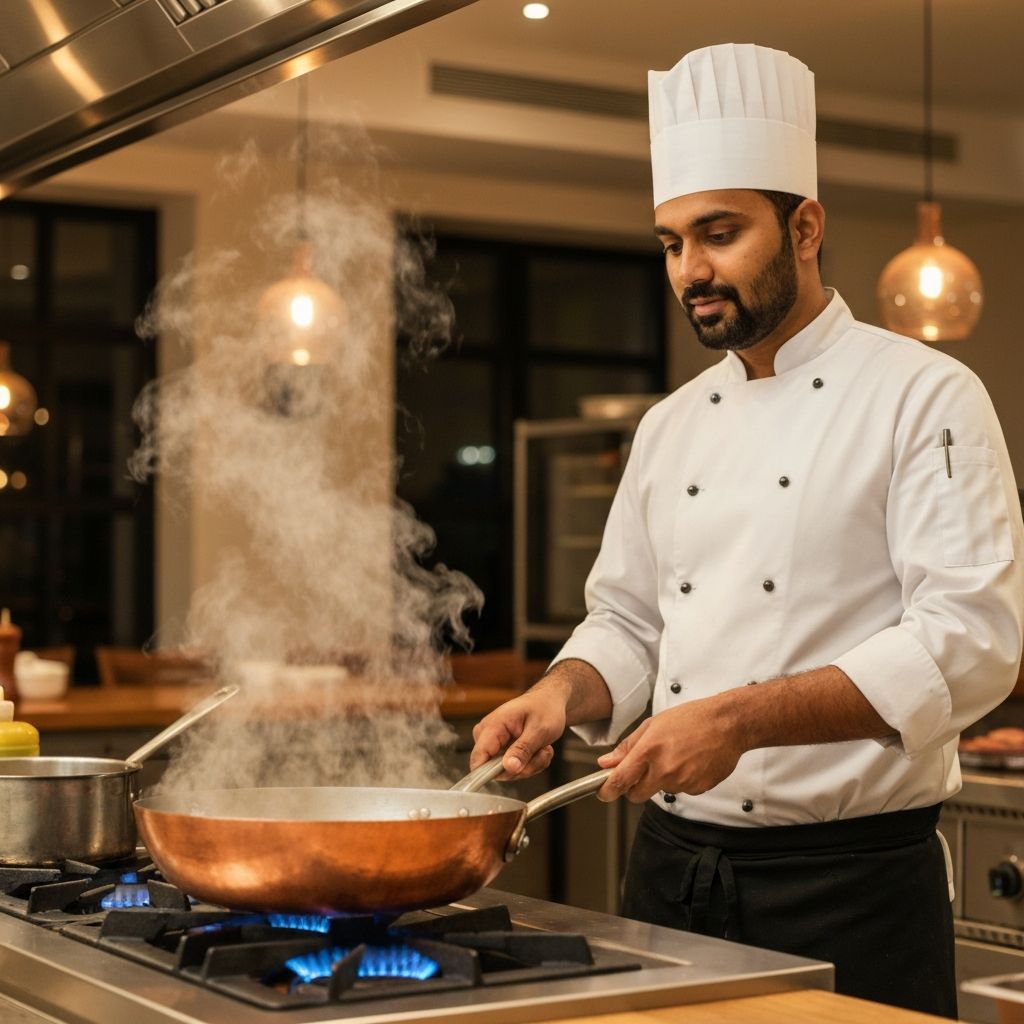
Because Mauviel cookware is 90% copper, it conducts heat 20 times faster than stainless steel. This means you almost never need high heat. Understanding this fundamental principle is the key to mastering copper cookware.
Why Low-to-Medium Heat Works
Copper's exceptional thermal conductivity means heat spreads instantly and evenly across the entire cooking surface. What takes high heat in aluminum or stainless steel can be achieved with medium heat in copper—often in less time.
This superior heat distribution eliminates hot spots that cause scorching and burning. Your food cooks more evenly, and you maintain precise control over delicate temperature-sensitive preparations like sauces, caramel, and chocolate.
Energy Efficiency & Prevention
Using lower heat settings significantly reduces your energy consumption—copper reaches cooking temperature faster and maintains it with less energy input. This makes Mauviel cookware both environmentally friendly and cost-effective over time.
More importantly, avoiding high heat prevents common cooking disasters: scorched sauces, burnt butter, overcooked proteins, and damaged pan surfaces. The low-to-medium approach gives you the reaction time to adjust and perfect your technique.
Temperature Guidelines for Mauviel Copper
Perfect for: Melting chocolate, butter, or cheese; making delicate sauces like hollandaise; warming foods; slow simmering
Most common setting for copper
Perfect for: Sautéing vegetables; cooking eggs and omelets; pan-frying; reducing sauces; caramelizing onions
Your standard cooking range
Perfect for: Searing steaks and chops; achieving a quick crust; boiling water; high-heat stir-frying
Rarely needed, use briefly
Specific Cooking Techniques
Master these essential techniques to elevate your cooking and harness the full potential of copper's legendary heat responsiveness.
Making Perfect Sauces
Copper cookware is universally regarded as the world's finest material for sauce making, and for good reason. The absence of hot spots means your sauce reduces evenly without scorching the bottom—a common problem with other materials that creates bitter, burnt flavors.
When reducing wine-based sauces, cream sauces, or demi-glace, copper's instant heat response allows you to make micro-adjustments on the fly. If your reduction is happening too quickly, lowering the heat takes effect immediately—giving you professional-level control over sauce consistency and flavor concentration.
Why Copper Excels for Delicate Work:
- •Chocolate & Ganache: Melt chocolate without seizing or burning. The even heat distribution prevents hot spots that cause cocoa butter separation.
- •Sugar Work & Caramel: Achieve perfect caramelization without crystallization. Copper's responsiveness lets you stop the cooking process instantly when you reach desired color.
- •Beurre Blanc & Emulsions: Maintain the narrow temperature range (160-180°F) needed for stable emulsified sauces without breaking.
- •Pastry Cream & Custards: Heat milk and cream gently without scorching, essential for smooth, lump-free results.
Pro Tip: For beurre blanc or hollandaise, keep heat at low (setting 2-3). The copper conducts enough heat to create the emulsion while giving you room to rescue the sauce if it starts to break.
Shop Sauce Pans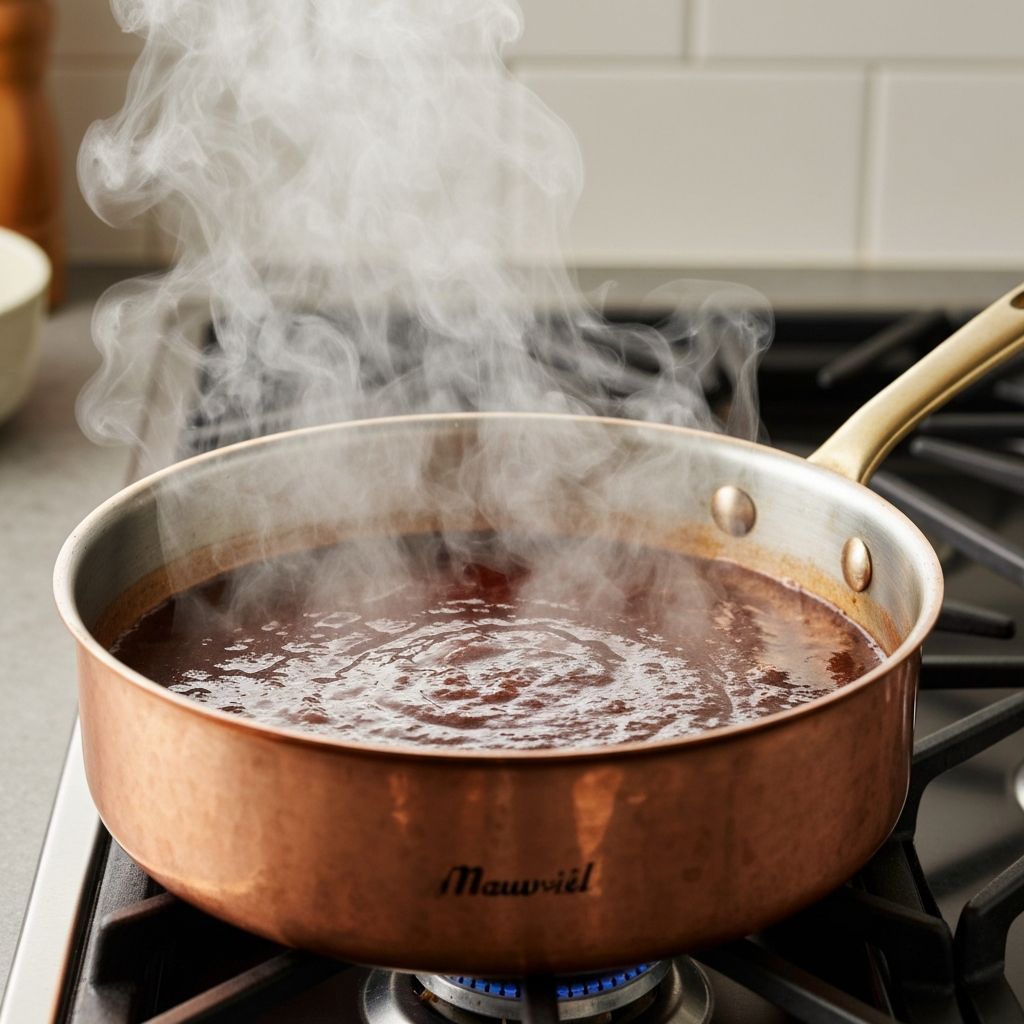
Searing Meat to Perfection
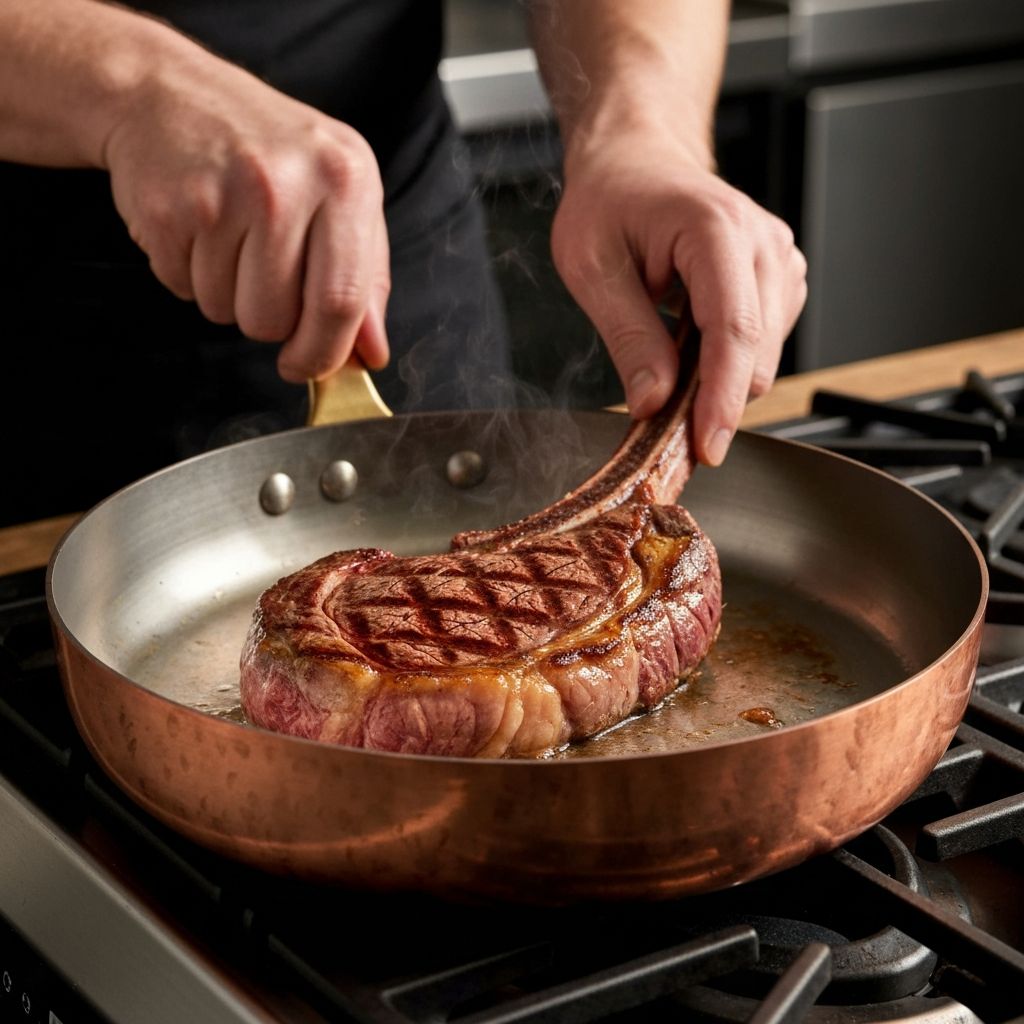
Achieving a restaurant-quality crust on steaks, chops, and chicken requires both high heat and even heat distribution. This is where the choice between Mauviel lines becomes critical, as different thicknesses excel at different searing tasks.
Using M'Heritage 250 (2.5mm) for Searing:
The M'250 is the professional choice for searing because its extra thickness provides thermal mass—the pan retains high heat even when cold meat hits the surface. This prevents temperature drop-off, ensuring continuous Maillard reaction for that coveted brown crust.
Technique: Preheat your M'250 on medium-high (setting 6) for 3-4 minutes. Add a high smoke point fat (avocado oil, clarified butter). Pat meat completely dry, season generously, and lay away from you to avoid splatter. Don't move it for 3-4 minutes—let the crust develop. The heavy copper base prevents sticking when the crust is properly formed.
Using M'Steel for High-Heat Searing:
For maximum heat and the ability to finish in the oven, the M'Steel carbon steel line is ideal. It can handle higher temperatures than copper (which can tarnish under extreme heat) and develops a natural non-stick patina over time.
Technique: Heat M'Steel to medium-high until a drop of water evaporates on contact. Add minimal oil, sear 2-3 minutes per side, then transfer the entire pan to a 400°F oven to finish cooking to desired doneness. Perfect for thick-cut ribeyes and bone-in chops.
Pro Tip: Never overcrowd the pan. Sear in batches if needed. Overcrowding releases moisture, which steams the meat instead of searing it, preventing crust formation.
Shop Sauté PansQuick Technique Reference Guide
Common cooking tasks and optimal Mauviel heat settings
Metal Utensils: What You Need to Know
One of the most common questions from new Mauviel owners is whether they can use metal utensils. The answer depends entirely on which interior lining your cookware has. Understanding this distinction will protect your investment and ensure decades of use.
Stainless Steel Interior (Safe for Metal Utensils)
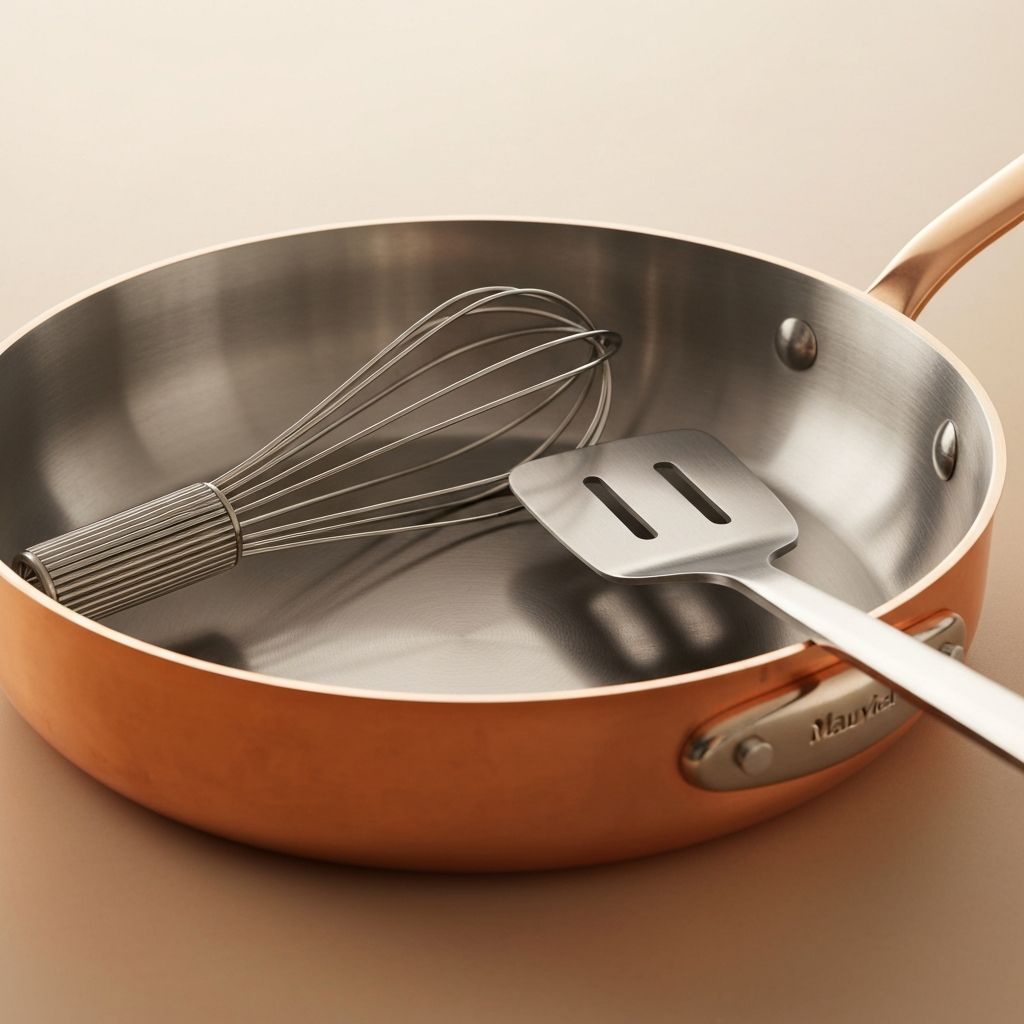
All modern Mauviel collections—M'Heritage 150s and 250s, M'Cook, M'150c, and M'250c—feature durable stainless steel interiors. This cooking surface is completely safe for metal utensils including whisks, spatulas, tongs, and spoons.
Stainless steel is highly scratch-resistant and maintains its integrity even with daily use of metal tools. While you may see minor surface scratches over time (which is normal and doesn't affect performance), you won't damage the pan's functionality or compromise food safety.
Recommendation: Feel free to use metal utensils, but avoid using sharp knives directly in the pan or aggressive scraping with metal edges.
Tin Interior (Vintage - Avoid Metal Utensils)
Traditional copper cookware features a hand-tinned interior—a thin layer of pure tin applied by French artisans. While tin is an excellent cooking surface with natural non-stick properties, it is softer than stainless steel and can be damaged by metal utensils.
Tin-lined pieces are primarily found in vintage collections, estate sales, or specially commissioned professional sets. If you own tin-lined Mauviel cookware, use only wooden, silicone, or heat-resistant nylon utensils to preserve the delicate tin lining.
Note: Tin lining requires periodic re-tinning (every 10-30 years depending on use) as it gradually wears away. Mauviel and specialized craftsmen offer re-tinning services.
How to Identify Your Interior Lining:
- •Stainless Steel: Bright, silvery-white surface that looks polished and uniform. Most modern Mauviel pieces.
- •Tin: Softer, warmer silver color with a slightly matte finish. May have subtle ripple patterns from hand application.
- •Check the stamp: Mauviel marks pieces with interior material. Look for "18/10" (stainless steel) or "Etain" (tin in French).
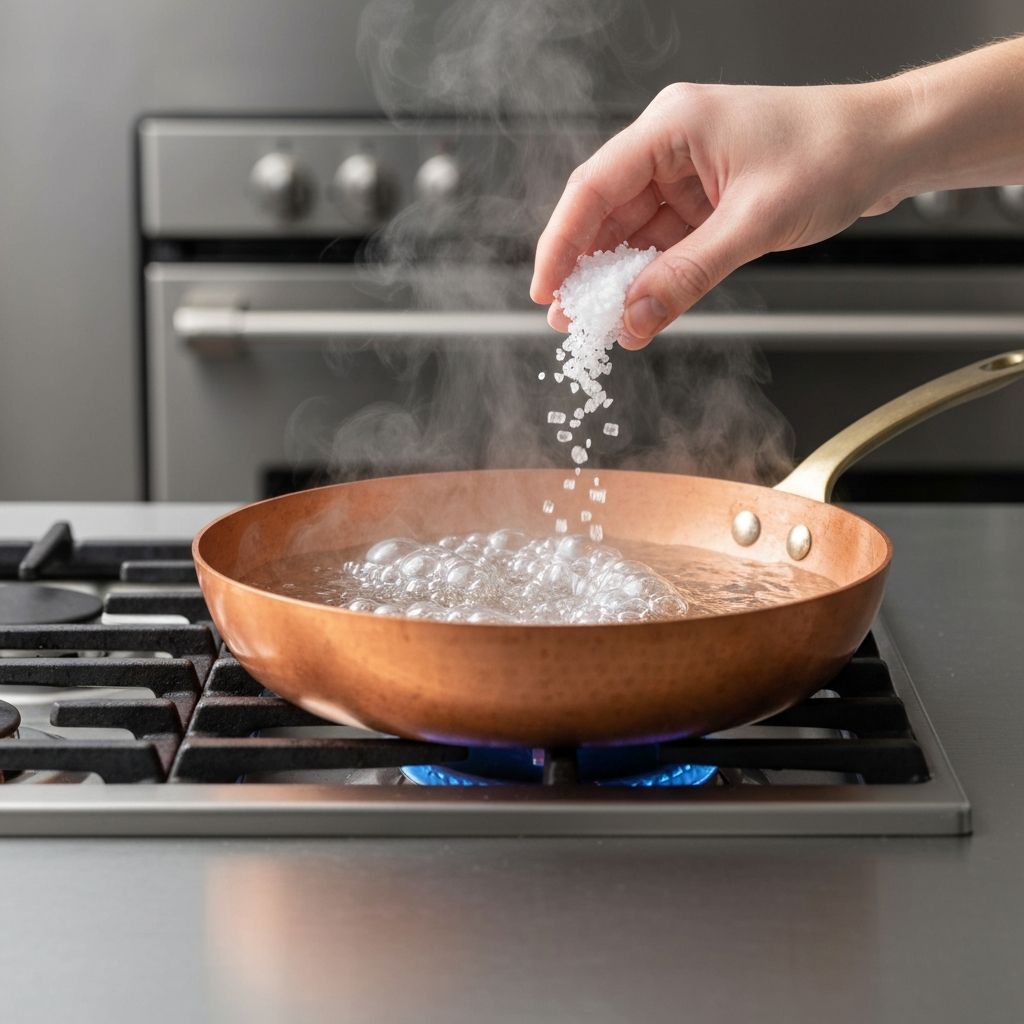
The Salt Pitting Rule: Add Salt After Water Boils
This is one of the most important tips to prevent permanent damage to your Mauviel cookware. Salt pitting is a common user error that creates small corrosion spots on stainless steel surfaces, and it's completely preventable with proper technique.
What is Salt Pitting?
Salt pitting occurs when undissolved salt crystals sit on the stainless steel cooking surface for an extended period. The concentrated chloride in salt creates localized corrosion, resulting in tiny dark spots or pits that cannot be removed through normal cleaning.
While these pits don't affect the pan's cooking performance or safety, they are permanent cosmetic blemishes on your premium cookware. Since Mauviel pieces are heirloom-quality investments, avoiding this damage preserves both function and appearance.
The Correct Method:
- Fill your Mauviel pan with water and place on burner
- Heat on medium setting (4-5) until water reaches a rolling boil
- Once boiling, add salt directly to the moving water
- Stir briefly to ensure complete dissolution
- Add pasta, vegetables, or other ingredients
The boiling water immediately dissolves salt crystals, preventing them from settling on the pan surface.
What NOT to Do:
- ✗Never add salt to cold water before heating
- ✗Don't add salt to warm but not-yet-boiling water
- ✗Avoid letting salty water sit in pan for hours before cleaning
- ✗Don't let food with high salt content sit in cold pan
Additional Salt Safety Tips:
- •Clean your cookware promptly after cooking with salt water or brines
- •When making brine or heavily salted stocks, add salt gradually to the hot liquid
- •Season foods after placing them in the pan, not the pan surface directly
- •If you accidentally added salt to cold water, stir continuously while heating to promote dissolution
Frequently Asked Questions About Cooking with Copper
Expert answers to the most common questions about using and caring for your Mauviel copper cookware.
Ready to Master Your Copper Cookware?
Invest in professional-grade Mauviel copper cookware and experience the precision and control that has made it the choice of Michelin-starred chefs for nearly two centuries.
Shop Mauviel Collection